
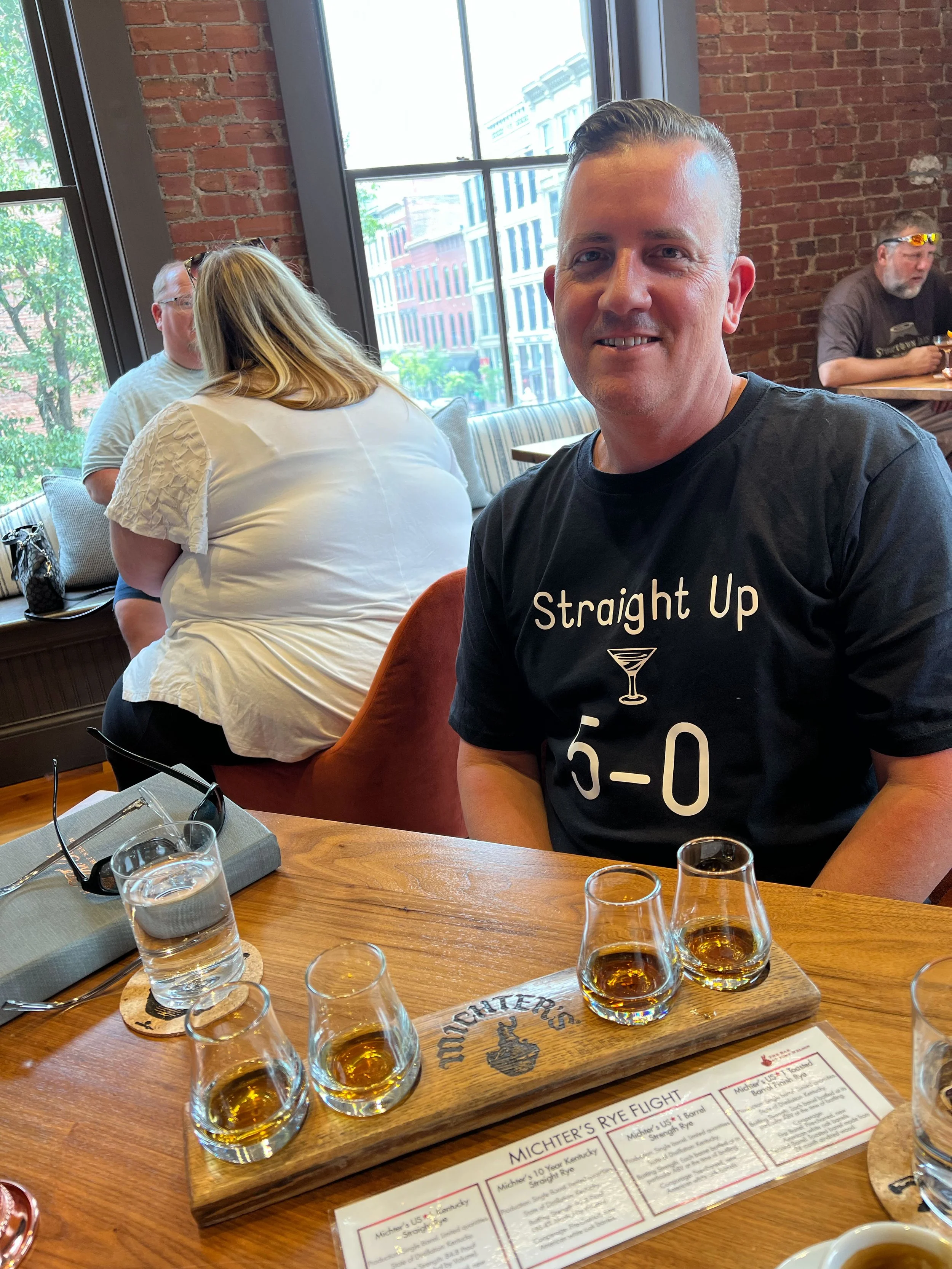
The Angel's Share: What a Kentucky Rickhouse Taught Me About Empathy in Marketing
"People will forget what you said, people will forget what you did, but people will never forget how you made them feel." - Maya Angelou
For a milestone birthday (no, I'm not telling you which one), I did something I'd wanted to do for years. I toured the bourbon distilleries of Kentucky.
I expected great bourbon. I got that. What I didn't expect was a masterclass in marketing.
Every distillery had its own vibe. Some felt like a family farm. Some felt like a cathedral to barrels. Each one had a different story to tell and a different way of telling it.
But every single one of them did the same thing. They made each guest feel like the whole experience was built for them.

One moment still sticks with me. A guide took a handful of us on an in-depth, immersive tour deep into the rickhouse, where the barrels sit and do their slow magic. This guy was beyond knowledgeable. But that's not what I remember most. He was kind. He was patient with every single question, no matter how many times he'd probably heard it before. He made a small group of strangers feel like invited guests.
In that moment, HE was the brand. And he represented it better than any billboard ever could.
Leave a little for the angels
If you spend any time in a rickhouse, you'll hear about the angel's share.
While bourbon ages, a little of it evaporates right through the barrel every year. It just drifts up into the rafters. Gone. Distillers could obsess over that loss. Instead, they gave it a beautiful name, because they know that what the barrel gives up is part of what makes the bourbon great.
That's when it clicked for me. The great distilleries run their hospitality the exact same way.
That guide's extra time in the rickhouse? Angel's share. The patience with the same question for the thousandth time? Angel's share. Telling the story for the people standing in front of him instead of reciting a script? You guessed it.
None of it shows up on a spreadsheet. None of it gets a line in the quarterly report. And ALL of it is what I'm still talking about months later.
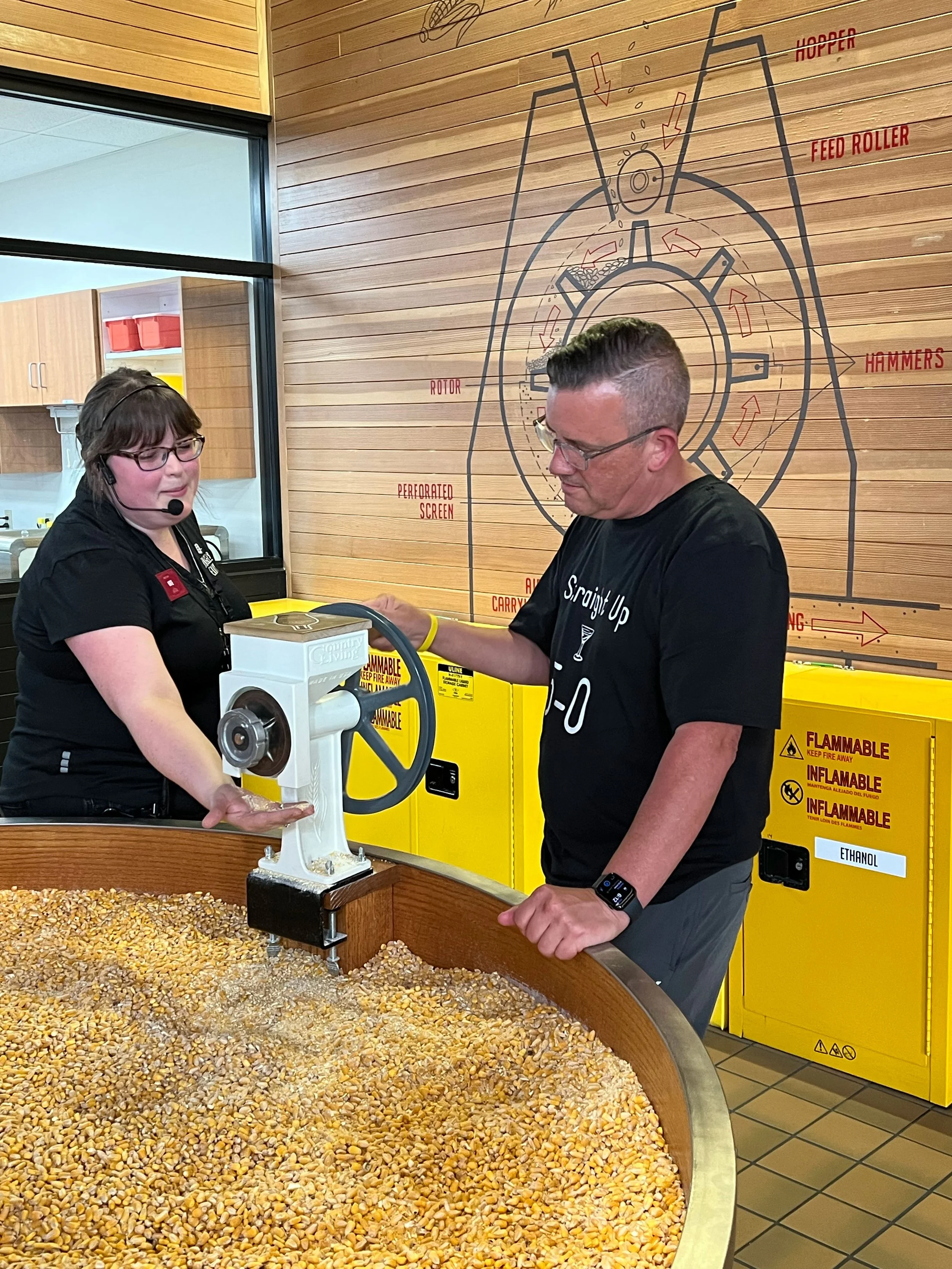
Most brands seal the barrel
Here's the kicker. These distilleries have more heritage than almost any brand on earth. Generations of family history. Legendary recipes. If any brand has earned the right to talk about itself all day, it's them.
And they didn't. They used their story as an invitation, not a monologue.
Most brands do the opposite. They try to seal the barrel so nothing escapes. Every touchpoint gets squeezed for maximum brand value. Our awards. Our legacy. Our innovative, best-in-class solutions. (Nobody has ever teared up over "best-in-class.")
I've sat through a LOT of brand meetings over the years. Way too many were about perfecting the monologue and protecting every last drop.
So here's the one question I'd ask of everything you put out into the world:
Who is this really for, us or them?
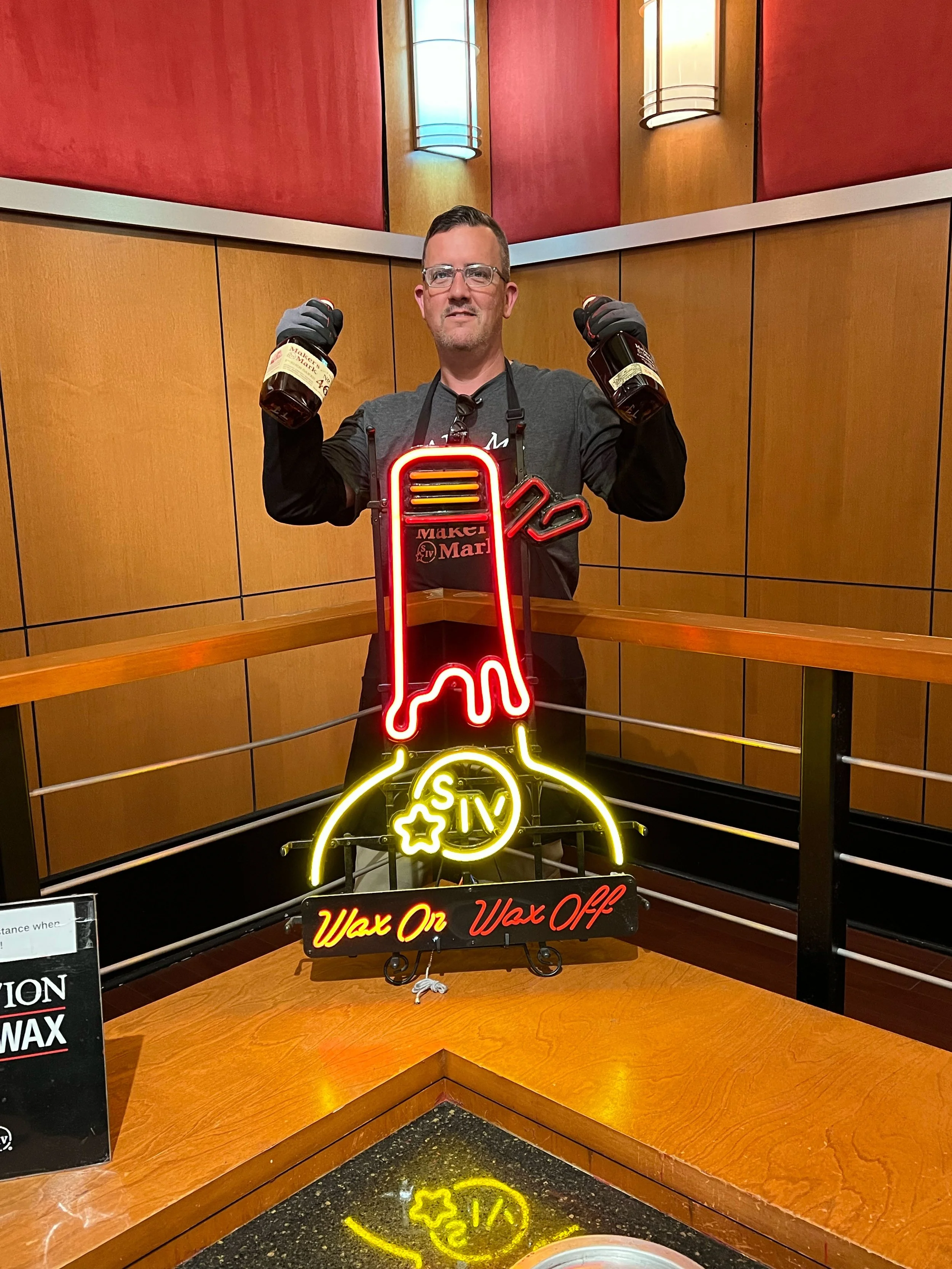
Why empathy is the differentiator now
Let's clear something up. Empathy in marketing isn't about being nice. Nice is the bare minimum.
Empathy is work. It's figuring out what a human being is feeling at the exact moment they bump into your brand. Are they stressed? Skeptical? Celebrating a milestone birthday and hoping the day lives up to the hype?
And right now it matters more than ever. Polish is cheap. AI can crank out a clean website, a tidy social calendar, and a perfectly lit product shot before lunch. Competence doesn't set you apart anymore. It just gets you in the door.
What nobody can fake at scale is the feeling of being known. When every brand in your category is sealing the barrel, the one that leaves a little for the angels is the one people remember.
Walk your own rickhouse
Your brand isn't your logo. It's every moment someone spends with you. So let's take the tour.
Social: stop announcing, start giving. The sealed-barrel post: "We're thrilled to be named a Top 50 Whatever for the third year running!" Your mom liked it. So did your VP of Sales. The angel's share post gives something away. It answers the question your customer is too embarrassed to ask, or says the thing they've been thinking but haven't heard anyone say out loud. Quick gut check: count the "we" and "our" in your last ten posts. I'll wait.
Website: your homepage isn't your autobiography. The sealed-barrel homepage leads with "Serving our clients since 1987." Congrats. The angel's share homepage leads with the problem that person had in their head when they typed in your URL, and helps before it sells.
Packaging: the tasting room is their kitchen counter. The sealed-barrel box is 40% logo with instructions in a font size designed by someone who hates eyes. The angel's share box opens without a knife and a prayer, tells them what to do first, and throws in a little something nobody asked for.
Storefront: the humans ARE the brand. The sealed-barrel storefront is a wall of company history, a staff member deep in a phone call, and that unmistakable "we close in ten minutes" energy. The angel's share storefront has a rickhouse guide. Somebody who notices you, takes the extra minute, and makes you feel like you picked the right place.
Hospitality isn't a department
Here's the part that doesn't show up in the brand guidelines. Brands don't have empathy. People do.
That guide didn't make me feel welcome because of a slick training video. He did it because somebody decided the guest's experience was the whole point, and then trusted people like him to deliver it.
If your content team gets rewarded for volume, you'll seal the barrel. If your frontline team gets measured on speed, you'll seal the barrel. If every idea has to survive a committee whose first question is "does this make us look good," you'll seal it airtight.
The angel's share only happens when leaders decide it's worth losing a little to make something great. That's a leadership decision, not a design decision.

Your homework
Pick five touchpoints this week. One social post, your homepage, one email, your packaging or product experience, and one in-person or service moment. Print them out and lay them on a table.
Then ask three questions of each one:
Who's the hero here, us or them?
What are we giving away that nobody asked for?
If our logo vanished, would this still feel like it was made for someone specific?
Circle every "we." Then rewrite just ONE of those touchpoints so it leaves a little for the angels. Just one.
The best brands aren't the ones hoarding every drop. They're the ones that pour you a glass, take the extra minute, and make you want to come back.
Cheers, and thanks for reading and sharing, Tom 🥃
Words and Hearts
Too many companies are confusing activity with accomplishment. They're churning out sanitized, committee-approved noise and wondering why nobody cares.
Without strategy, content is just stuff, and the digital world is completely suffocating in stuff.
Read that again.
Every single morning, I open up my feeds and see a relentless tidal wave of blogs, graphics, videos, and hot takes. Algorithms push it. Generative tools pump it out in seconds. Every brand on the planet seems to be screaming, "Look at us! We posted today!"
Too many companies are confusing activity with accomplishment. They're churning out sanitized, committee-approved noise and wondering why nobody cares.
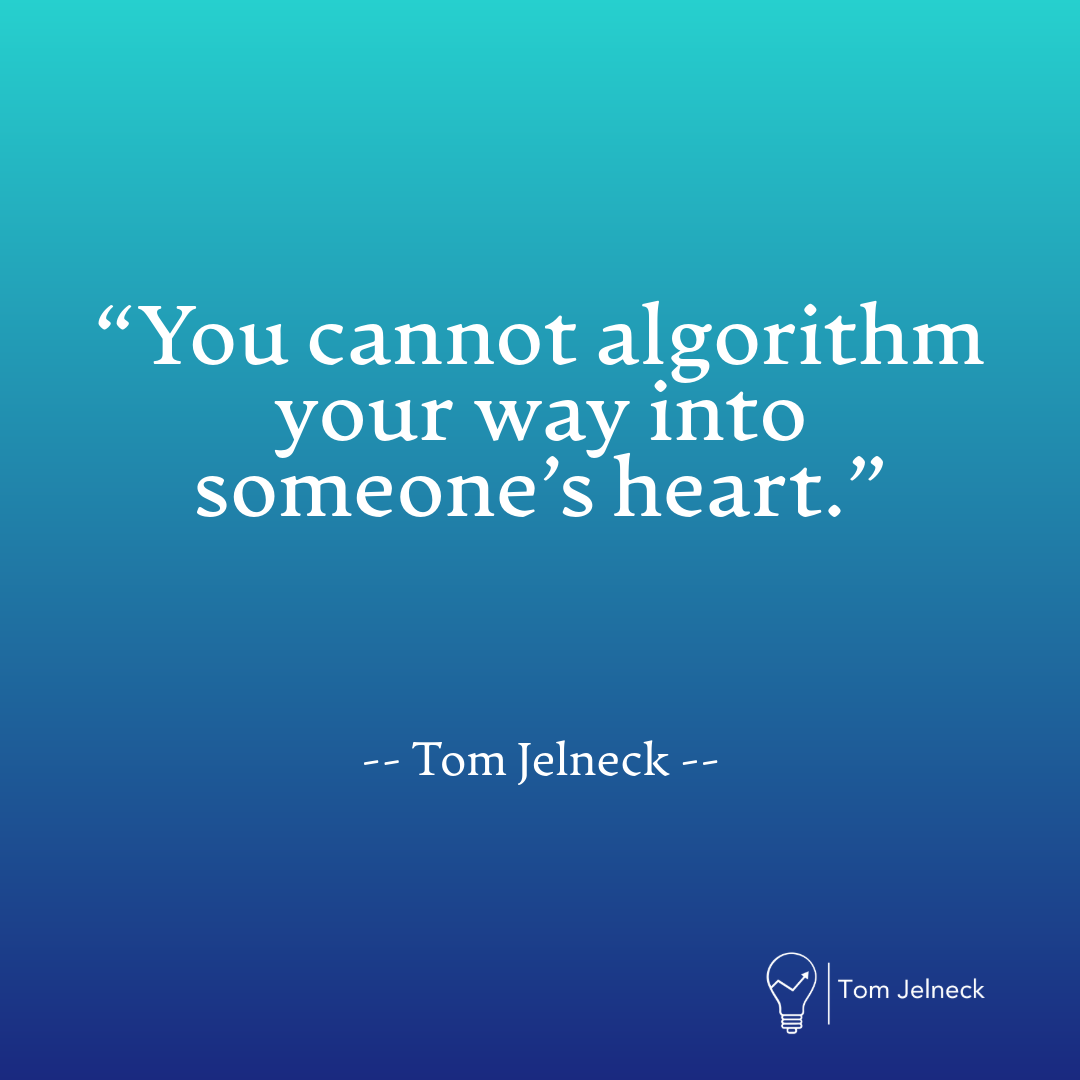
Here’s the cold, hard truth: You cannot algorithm your way into someone’s heart.
In a world drowning in digital stimulus, playing it safe is a slow death for your brand. If you want to build real brand authority, the kind that turns casual scrollers into fiercely loyal brand advocates, you have to stop trying to blend in with the noise.
You have to be unapologetically remarkable.
Here is how you actually build brand authority that breaks through the noise:
1. Ditch the Corporate Gobbledygook
Drop the lawyer-speak, the buzzwords, and the sanitized corporate jargon. Real recognizes real. If your content sounds like it was vetted by a compliance committee to ensure zero personality, scrap it and start over. Speak like a real human talking to another real human. Humanity is your ultimate competitive advantage.
2. Double Down on Raw, Unfiltered Human Creativity
AI can generate text, but it doesn't have a soul. It hasn't failed, it hasn't learned, and it doesn't have a point of view. True creative authority comes from sharing real experiences, bold truths, and clear perspectives. Have the courage to take a stand. Trying to appeal to everyone guarantees you will stand out to no one.
3. Tell Rich, Compelling Stories (Where Your Customer is the Hero)
Stop shouting about how great your features are. Nobody cares about your product until they see how it solves their problem or sparks genuine joy. Shift the spotlight. Make your customer the hero of the story, and position your brand as the catalyst. Frame your narrative around their transformation, not your ego.
4. Build Trusted Relationships with Other Creators
Authority isn't built in a silo. Stop treating everyone in your space like the enemy and start treating them like collaborators. When you build authentic, trusted relationships with other real creators—co-creating, elevating their voices, and having real conversations—you tap into something money can’t buy: earned trust and shared community.
The Bottom Line:
Branding isn't about logos, fonts, or matching hex codes, it’s about how you make people feel. It’s about trust earned through authenticity.
In a marketplace starving for real connection, the brand brave enough to be human, bold, and genuinely helpful is the one that wins.
Stop making noise. Start making an impact.
The Metric That Outlasts the Market: Why Caring Is Still Your Strongest Advantage
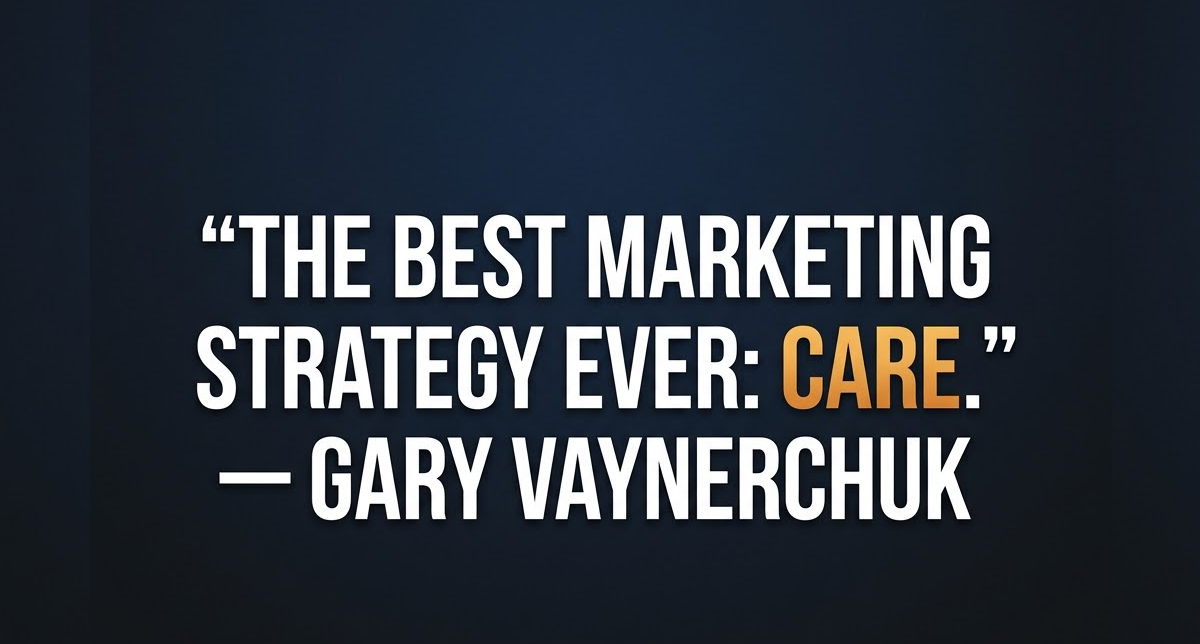
"The best marketing strategy ever: CARE." — Gary Vaynerchuk
It sounds simple. Almost too simple. But if you look across the modern business landscape, true, unvarnished care has become one of the rarest competitive advantages in business.
Most organizations dont start out cynical. On day one, founders and teams are fuelled by a clear mission: solving a real problem for real people. But as revenue grows, boards expand, and quarterly targets tighten, a subtle shift happens. The focus drifts from serving people to chasing numbers and quotas.
When numbers replace purpose as the primary driver, the soul of a brand slowly erodes—and the market notices.
Real-World Case Studies: Caring vs. Chasing Metrics
To understand how powerful Gary Vs core message is, compare how different brands approach their mission as they scale:
Case 1: Patagonia — Sacrificing Short-Term Sales for Long-Term Trust
In 2011, outdoor apparel brand Patagonia ran a famous full-page Black Friday ad in The New York Times with a bold headline: Don't Buy This Jacket. The campaign urged consumers to repair what they already owned or buy secondhand rather than needlessly consuming more.
While conventional marketing logic suggested this would kill sales, the opposite happened: Patagonia’s revenue grew by double digits over the following years. By proving they cared more about their core mission: environmental sustainability, than driving a single weekend’s sales metrics, they built bulletproof brand equity. Fast-forward to today: Patagonia holds legendary customer loyalty and a multi-billion-dollar market presence while keeping purpose strictly at its center.
Case 2: Zappos — Prioritizing Customer Care Over Call Center Efficiency
Most retail call centers operate on strict efficiency metrics: short call handling times, rapid scripting, and minimal cost-per-ticket. When Tony Hsieh built Zappos, he flipped that metric entirely on its head, treating customer support not as an operational expense, but as their primary marketing budget.
Zappos famously gave representatives full freedom to spend hours on the phone with customers, send free flowers during tough times, and handle returns without red tape. They traded operational efficiency metrics for authentic care. The result? Millions in word-of-mouth marketing, industry-leading repeat customer rates, and a $1.2 billion acquisition by Amazon.
Counter-Case: The Trap of Transactional Drift
On the flip side, we see countless brands across retail, SaaS, and agency spaces start strong with high customer satisfaction, only to hit a wall when private equity or public quarterly demands take over. When support budgets get slashed, ad spend goes strictly into aggressive retargeting ads, and customer service turns into automated endless loops, churn skyrockets. Acquiring a new customer suddenly costs 5x to 7x more than retaining an existing one, trapping the business on an expensive, unsustainable growth treadmill.
The Domino Effect of Mission Drift
When an organization replaces its founding mission with short-term quarterly targets, the breakdown happens across three critical fronts:
Marketing becomes transaction-focused, not relational: Instead of educating, helping, or connecting, your messaging devolves into aggressive sales pitches, clickbait, and endless discount cycles. Customers quickly realize they are treated as data points on a spreadsheet rather than human beings.
Brand equity degrades: Competitors can easily copy your product features, pricing, and advertising campaigns. What they cannot copy is deep-rooted customer trust. When you stop caring, your brand becomes a commodity overnight.
Internal culture fractures: Great employees dont wake up inspired to hit an arbitrary CAC (Customer Acquisition Cost) metric; they show up to make a meaningful impact. When leadership trades mission for metrics, top talent leaves, and burnout settles in.
How Mission Drift Kills Longevity
Chasing short-term metrics can spike revenue temporarily, but it acts like high-interest debt against your brand’s future.
Long-term market survival relies on retention, advocacy, and organic trust. When customers feel cared for, they become vocal champions. When they feel commoditized, they churn the moment a cheaper or shiny alternative comes along.
Organizations that lose their mission end up trapped spending continuously higher acquisition costs just to replace the audience they failed to retain.
3 Ways to Keep Your Organization Anchored to Its Mission
Staying true to your core purpose while scaling requires intentional design across three areas:
1. In Your Marketing: Tell Impact Stories, Not Just Product Specs
Shift your marketing metrics from purely transactional KPIs to relational indicators. Measure customer sentiment, advocacy, and lifetime value alongside immediate conversion rates. Frame content around how your solutions transform lives, and build transparent feedback loops directly into your public channels.
2. In Your Culture: Align Incentives with Mission Outcomes
If your support or sales teams are rewarded only for volume or ticket closure speed, they will optimize for speed—not service. Reward employees who go out of their way to solve hard customer problems. Build cultural rituals that celebrate client wins as internal victories.
3. In Your Business Strategy: Define Your Non-NegotiablesEstablish clear boundaries on what your organization will not do for a quick profit. Whether that means refusing to compromise on product quality, avoiding high-pressure sales tactics, or prioritizing ethical sourcing, your boundaries communicate your real values far louder than a mission statement on a wall.
The Bottom Line
Growth and mission are not mutually exclusive—in fact, mission is what makes growth sustainable. When you align your team, your culture, and your customer experience around authentic care, marketing stops feeling like a forced pull and starts acting as an organic magnet.

Share The Positive Vibes
A tidal wave of polished ad campaigns, outrage bait, and corporate gobbledygook preaching "disruption" while saying absolutely nothing. We’ve trained an entire generation of marketers to play on fear, FOMO, and endless interruption. We call it "engagement."
Scroll through LinkedIn for five minutes and what do you see?
A tidal wave of polished ad campaigns, outrage bait, and corporate gobbledygook preaching "disruption" while saying absolutely nothing.
We’ve trained an entire generation of marketers to play on fear, FOMO, and endless interruption. We call it "engagement."
But let’s pause and give ourselves a reality check: Nobody wants to be nagged into buying from you.
Early in my career, back when my office view was cornfields at a Benedictine monastery, I learned a lesson that applies to digital marketing just as much as it does to life: What you put out into the world creates the culture you live in.
If your brand messaging is rooted in cynicism, anxiety, or high-pressure noise, that’s the energy you bring to your market.
But when a brand chooses to spread genuine positivity, real human stories, and actual value?
✨ You stop competing for temporary clicks and start building actual loyalty.
✨ You lift your audience up instead of dragging them down.
✨ You move the needle for your bottom line by simply being remarkable.
Spreading positivity isn't fluff. It isn't rainbow-and-unicorns corporate speak. It’s smart, battle-tested strategy to connect with real humans.
Words can move mountains. Choose messaging that leaves your industry better than you found it.
Grab a cup of Coffee today and ask yourself: Is your brand adding light to the feed, or just adding to the noise? ☕
On Being Remarkable…
Most brands are playing it so safe they are practically invisible.
They pump out slick, high-gloss campaigns packed with corporate gobbledygook and expect people to care. But today's consumers have a finely tuned B.S. detector. They don't want another sanitized echo in their feed. They want something real. They want something remarkable.
Most brands are playing it so safe they are practically invisible.
They pump out slick, high-gloss campaigns packed with corporate gobbledygook and expect people to care. But today's consumers have a finely tuned B.S. detector. They don't want another sanitized echo in their feed. They want something real. They want something remarkable.
As Seth Godin so perfectly put it:
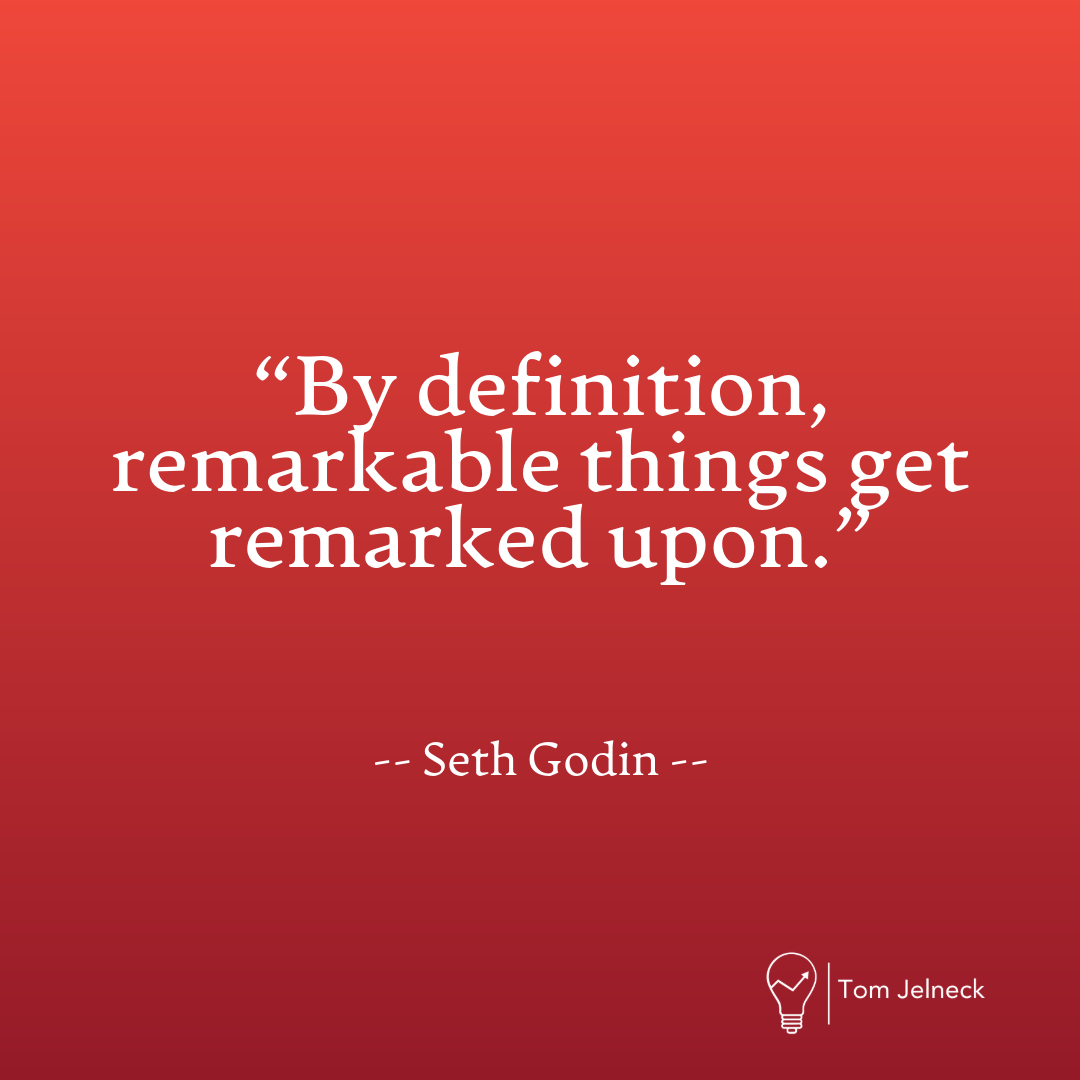
"By definition, remarkable things get remarked upon."
If nobody is talking about your brand, it isn't because your ad budget is too low. It's because your messaging didn't give them a single reason to pause, care, or share.
In a world of 5-second attention spans, you have to dig deep and stop being an echo. Here is how you craft campaigns that actually break out of the box:
▪ Ditch the Corporate Gobbledygook
Drop the lawyer-speak, buzzwords, and sanitized marketing jargon. Speak like a real human talking to another real human. Real recognizes real. If your campaign copy sounds like it was vetted by a compliance committee to ensure zero personality, scrap it and start over.
▪ Make Your Consumer the Hero (Not Your Brand)
Stop shouting about how great your features are. Nobody cares about your product until they see how it solves their problem or sparks joy. Shift the spotlight. Make your customer the hero of the story, and position your brand as the catalyst.
▪ Stop Interrupting, Start Inspiring
Nobody likes being nagged, spammed, or interrupted. If your strategy relies on forcing your way into someone's space, you've already lost. Create work that pulls people in, makes them smile, and evokes a genuine emotional reaction.
▪ Have the Courage to Have a Point of View
Safe messaging is a slow death for a brand. Trying to appeal to everyone guarantees you will stand out to no one. Share a bold truth, take a stance, and embrace a clear perspective. The right audience will respect you for it.
▪ Ensure the Inside Matches the Outside
You can't fake remarkable. If your campaign makes big promises that your internal culture or customer experience can't deliver, the chinks in your brand armor will show immediately. Truly remarkable marketing starts with a genuine, human-first culture on the inside.
The Bottom Line:
Stop trying to blend in with the noise. In a marketplace starving for authenticity, the brand brave enough to be human, bold, and unapologetically remarkable is the one that wins.
The Multi-Million Dollar Bait-and-Switch
A while back, I was looking at a company with a stunning, high-gloss brand. Beautiful website, slick ad campaigns, and a mission statement packed with corporate gobbledygook about "empathy," "innovation," and "putting people first."
Not too long ago, I was looking at a company with a stunning, high-gloss, feel-good brand. Beautiful website, slick ad campaigns, and a mission statement packed with corporate gobbledygook about "empathy," "innovation," and "putting people first."
On paper, they looked like absolute rockstars.
Then I had the chance to peek behind the curtain. The internal reality? Total disconnect.
Teams were burnt out, leadership was operating in silos, and the actual culture contradicted every single promise made on their homepage and in their employee handbook.
Here’s the hard truth:
Today’s consumers have a finely-tuned B.S. detector.
You can spend a fortune on high-gloss branding, fancy PR agencies, and influencer campaigns, but the second your internal reality doesn't match your external messaging, chinks start showing in the brand armor.
Your brand isn't defined by what you say in a marketing meeting on Monday. It’s defined by how your leadership treats people on a random Tuesday morning behind closed doors.
How to Close the Gap:
Culture IS Your Marketing:
Your team members are your front-line brand ambassadors. If your internal culture isn't human, your external brand will eventually sound fake. You can’t broadcast empathy to the world if you aren't practicing it inside your own walls.
Pass the Humanity Test:
Ditch the lawyer-speak and corporate jargon, both in your internal memos and your public messaging. Speak like a real person. Real recognizes real.
Align the Inside with the Outside:
Define what’s at the core of your business. Why do you exist? What do you actually care about? When your internal operations align with your external promise, trust follows automagically.
The Bottom Line:
Stop trying to market a brand identity you haven't actually built internally. Be real. Be genuine. When the inside matches the outside, you don't have to force authenticity, it just happens.

Fixing The Glitch
If your brand is super duper excited to get to work with a new agency on that razzle-dazzle #marketingcampaign, it's always a really good idea to hit the pause button and take a deep look at the inside reality of your company.
If your brand is super duper excited to get to work with a new agency on that razzle-dazzle #marketingcampaign, it's always a really good idea to hit the pause button and take a deep look at the inside reality of your company. Does it match the persona that's about to be unleashed to the public? Is the #culture that you think you have really the culture that you do have? Is your team happy and well adjusted? Will they actually do all of the things that you're telling the world that your company will deliver? No matter how shiny and pretty the new campaign is, if your internal reality can't deliver on the promise, OR if your target consumers smell any bullshit, your brand can be screwed.
How to fix the glitch(es):
If you have any toxicity in the organization, it's time to cut it out, like, now.
Communicate with your team members with as much #transparency as humanly possible.
Some organizations will actually hire a secret shopper, I'd rather you trust in your team members enough to deliver the goods. If you have any doubts, set them free.
Build a safe and open door policy to address any real team member concerns, and here's the trick, act on their concerns and be their best advocate.
Ask your customers about their experience, not just a survey, a real conversation, and LISTEN.
Ensure that you have #customerservice protocols and procedures in place to handle customer service challenges like human beings, and not like robots.
I can't emphasize enough how important it is to get your organization shored up before you pull the #marketing trigger. It may not be easy and you may find yourself having to make some really difficult decisions for the good of the brand, but it must be done. Thanks for reading and sharing.

Hard Pass.
This ridiculously simple quote would save so many small businesses so much time, aggravation, and money if they just digested it and took it to heart. As a small business owner, sometimes the tendency is to get that product or service in front of EVERYONE.

“Everyone is NOT your customer.”
This ridiculously simple quote would save so many small businesses so much time, aggravation, and money if they just digested it and took it to heart. As a small business owner, sometimes the tendency is to get that product or service in front of EVERYONE. And while I completely understand that in terms of exposure, etc., it's almost NEVER a good idea to focus on this strategy.
I learned so many lessons owning and operating a digital marketing agency, especially in the early days. I would take ANY customer just to pay the bills, and over time, thank GOD, I came to realize that this strategy was a runway to nowhere. I had to learn how to say no and how to pass on all of the little guys who simply didn't have budget, OR didn't "get it", or simply wanted instant results.
By chiseling away until you find your target customer sweet spot, you start to also find the real value that your company brings to the marketplace. You start to stand firm on your pricing, you start to design your material for that certain demographic, you start to grow and thrive within a niche, you start to truly speak the language of the customers that are going to gravitate to you. You now KNOW your customer, and that is by far one of the fundamentals of marketing and branding.
It's not easy to pass on a customer, especially when people rely on you for paychecks, but the headaches, trouble, and the money that it costs in the long run far outweighs the quick benefit of some cash. Remember, niches make riches.
Thanks for reading, sharing, and Hard Passing on customers who don't spark joy.